I have decided to turn this event into the best thing that has ever happened in my life. A chance to start anew with all the wisdom learned over the last few years I got to start with a clean slate a new life, I'm not going to create a new me, rather I am going to let go of the parts that aren't me.
Monday, August 03, 2026

Sunday, August 02, 2026
One Month
I am not going to lie, divorce is hard even when you know it's the best thing for everyone, it still hurts and it's difficult.
My main goals are to
- Take Care of Myself
- Work out the Grief
- Dealing with Challenges
Funny that for people who experienced trauma in their childhood a breakup brings out those unresolved memories. I dealt with stuff no child should have ever dealt with, and I thought I had moved past that, learned my lessons and made peace with my childhood trauma, I think that 10% of my pain is from the divorce and 90% of the pain is unacknowledged abuse and abandonment I experienced as a child.
The good thing is that I am resolved to properly heal and that I am not doing this alone, I have reached out to all my people to help me get through this. I am naturally very impatient and I use that to my advantage for most situations, however, there is no shortcut for healing, so I will have to be patient and trust the process. I am willing to do the work and I have decided to make this the perfect chance to start a new life in which I let go of my previous patterns of dysfunction.
I am taking care of myself by exercising every single day, cutting out alcohol and junk food. I have eliminated as many bad habits as I can think of, I am eliminating all negativity from my life, anything that doesn't help me, I'm purging it out. I know the things I want to be doing long term, but first I need to take care of so many different things, first of which is making sure I'm getting my work done, I need this job, next is arranging living by myself, this is something that I've never really done.
I remember that I was single with no girlfriend (or wife) from 20 years old to 22 years old while I was in the Marine Corps. I do remember that for the most part I was happy on my own, except Sundays, I remember I tried going to church in NC to make myself feel like I felt when I was home.
I am going to learn how to have my best possible life, I choose to be happy, I choose gratitude, I choose to enjoy life no matter what happens.
Grief
I am working on learning how to grieve and let go in a way that's healthy and lasting. My marriage had many happy moments but it's no more. I am at peace with it, and I am moving on. However, the heart doesn't work like that, you can't just flip a switch and forget the last 25 years of your life, it's a process and I admit I have to get help for that, that's why I am studying this like it's a college assignment and I am talking to a therapist and I am leaning on my support system, because I am determined to do this correctly, since my life depends on it, literally.
Challenges
It's not easy, but I feel confident I can get through all the stuff, however there are days where everything comes at once and it's overwhelming. I am working on getting the tools to help me through that.
The goal is to turn this into the best thing that has ever happened to my life. I get to decide what this means for me. I lived for too long being afraid of not being in a relationship, doing things to please others and denying myself the things I wanted for me. So I am done living like that. I am going to live my best life and I am going to become the best version of myself.
Anyway, that's it for today.
Ah, one last thing, I've decided that I am going to keep writing, I will answer my calling, I just know I can create stories worth sharing, but I have to do things in the right order, I need to focus on my well-being and taking care of the logistics of my new life first, but I haven't stopped writing, it soothes me, I heals and I think my humble contributions might be worth sharing with the world someday. Inspired by Gabo and SK, I want to make tales to entertain you, my dear reader.
-JV
Monday, July 27, 2026
How to be a Stoic
The other day someone very dear to me asked me if I had any books about stoicism, so I went and got them their own copy of "How to be a Stoic" by Massimo Pigliucci, which is a pretty good introduction to the philosophy of stoicism.
My aim is to live my life according to the three stoic principles and the four cardinal stoic virtues, I don't always live up to my values, but I do try and I don't quit.
In any case, just wanted to explain how can a person live like a stoic?
You practice the three disciplines and the four virtues.
The Three Disciplines
The Discipline of Perception.
Control how you see events. Separate the facts from your judgement about those facts. I like to illustrate this with the Buddhist Parable of the Second Arrow.
Pain is inevitable, suffering is optional. You cannot avoid feeling the pain of something that you did not desire, but you get to decide how you react to it. You separate the cold, objective facts from your judgement about it.
The Discipline of Action
Focus your energy only on what you can change. Act with justice, kindness, and public service. The past is past, cannot be changed, there is no point in living in the past. Nobody knows what will happen tomorrow, worrying about something that hasn't happened yet is unnecessary suffering.
This doesn't mean don't learn anything from the past, or don't plan ahead for the future. It means that there is no point beating yourself up for something that's already in the past, and getting anxious about things that may or may not happen is a waste of mental energy.
The Discipline of Will (or Desire)
Accept fate with grace, master your inner desires and find peace with what happens outside your control.
When an unexpected obstacle disrupts your plans, you say to yourself "This is exactly what I needed to grow" Use the setback as an opportunity to practice, patience, resilience and creativity.
The Four Cardinal Stoic Virtues
Wisdom
Knowing what is good, what is bad, and what is indifferent. Focusing only on things you can control.
Courage
Facing fear, danger, and hardship with strength, enduring pain or difficult tasks without complaint. Standing up for what is right despite personal risk.
Justice
Treating all people fairly and with moral integrity. Working for the common good and helping your community. Act with kindness and refusing to harm others.
Temperance
Practicing self-control and moderation in all things. Mastering your desires and avoiding extremes. Keeping a balance between work, rest and pleasure.
Applying Stoicism via Exercises
(source: this Daily Stoic article)
Reflection
A view from Above
Contemplation of the Ideal Man (or Woman)
Philanthropy
Self-Retreat
Journal
Self-Control
Friday, July 24, 2026
Same me, new beginnings
(warning: This content was 100% Human written, with grammar error and confusing sentences and also 100% authentic)
I have worn many different hats, different roles, I have lived many lives. I was once a child in Venezuela, a person,. Then I was an immigrant in South Florida, in my new country I learned to view myself as an "other" Now I was a "Latino", "Hispanic" before then I never thought about my identity based on my culture, but then I learned about what that meant, that I was not "white". Then at 18 I did not only join the Marine Corp, I became a Marine, there's a difference. Later on I became a "war veteran" and to the Federal government I was a "disabled veteran" thanks to PTSD and loud explosions aimed at ending my life. After the military I knew I wanted to be an engineer, a professional, middle class. Homeowner, citizen, a voter.
All my life, for as long as I can remember I just knew that I wanted to be a father and a husband. I don't remember ever deciding, it was sort of the thing you were supposed to do, grow up, get an education, get married, have kids, those kids then will go and do the same as the parents, they will also grow up, learn a profession and also get married and have kids. Never questioned it, just accepted it.
In 2002 I became a husband, less than six months before putting my boots in the Iraqi soil and taking part in an American history fiasco. In 2005 my wife made me a father to Jolyne, then in 2007 again, a father to Gaby.
This year I will no longer be a husband. Martha and I are splitting up.
All my life I used to think that if you were married it meant you were successful and, if you were divorced, something was broken, you were unlovable or had a dysfunction. Divorcees were losers, not good, married people, they got their shit together and they are happy forever after.
Now I know, that those two things happiness and marriage don't always go together. Martha and I were struggling for a while, but we both really wanted things to work, we tried to stay together, we really did. At the end it did not work out. Ending it is what we both want, we both agree that going our separate ways is the best for everyone.
There were many happy moments, in fact I'm willing to say that if you were to count the minutes we were married I'm willing to bet more than 90% of those were happy times at least not miserable. I should not be speaking for Martha on that assessment but I want to believe she'd agree.
But we had our issues and we were not able to resolve it. I take ownership of triggering the end of the marriage, but at the end she had the last word and I respect that.
Going forward, I am going to spend all the energy I had invested in trying to salvage the relationship back to me, I thought that if I made my wife happy then I would be happy, now I know that's a mistake. I am now focused on making myself happy, with the understanding that nobody can do that for me, but me.
I no longer think that I have to be in a relationship to be happy, I used to have this deep fear of loneliness and dying alone and all of that. Today that's not a fear I have, I look forward to being my own person again and forging my own path, I am going to do whatever I like to do because I want to and because I like it, only. I'm no longer going to do anything in order for somebody else to like me or approve of me, because I realized that wanting approval, love, affection validation from other people without first approving, loving and validating yourself is a recipe for toxic relationships.
As far as roles, hats and shoes, I will always be a father, with my own repertoire of dad jokes, infinite unconditional love for my girls, and my full presence, they are my first priority always. Thankfully, they are both well-adjusted adults. I want to believe we did a good job in raising two amazing human beings, Kudos to Martha for fiercely protecting our girls from potential threats and bad situations. I'd like to think we set a good example in that front.
In the near future I am going to be focused on healing, grieving the loss, owning my mistakes, and then finding my way, my plan is to live well, to find happiness, meaning and purpose not on external things or achievements but in how I am engaged in the moment.
I really like my profession, my career as a software engineer has been rewarding (emotionally and financially) but that's not all that I am. Yes, I am a brown immigrant from a hispanic country to my fellow Americans of the caucasian kind, but that's just a fraction of who I am, same goes for being a Marine, a grunt that can still fire every weapon in the NATO arsenal and can still run 5 miles without collapsing. The infantry grunt is still there but it's also a fraction of who I am, the war in Iraq made it so that I cannot forget that phase in my life, but again, that's not all there is to being me.
I've been thinking about that, what is my purpose, how do I give meaning to my life?
I can tell you a couple of things, being a father comes easy to me, reading books happens almost automatically, it's like, what I do by default? lol. I love baseball, I stopped following it every day because I was busy, busy with work, school, kids and as of late, doing everything I could to make my marriage work. Now that I have more free time, my love for baseball resurfaced, it wasn't buried too deep. I like to run and work out, I might be a bit more intentional and systematic in my personal fitness, after all, I will be 50 years old in less than 3 years so I want to live healthy so I can enjoy my time left walking this earth. Those who know me might be surprised to learn that I have a deep, wide love and appreciation for music. I want to go back to playing the piano/keyboard, maybe even play for audiences in a band somewhere. I've always wanted to learn how to dance, I've always been stiff, with no rhythm, my dancing is so bad, my latino card was almost revoked. I've always had an issue with that, and I want to do it, I know I can do it, when I was a high school freshman I was the nerdiest, skinniest, clumsy 14 year old in my high school, and someone made a remark about how "I could never make the baseball team" I set out a goal to try out for the high school baseball team and make the cut, and I did, same goes for USMC boot camp, undergraduate degree in engineering while working full time with no support from my parents, just Martha and me. Same for grad school, worked full time and went to school after work every night until I dropped dead tired on top my laptop and notes and cups of coffee. I know I can do hard things, so yes, I can learn to dance salsa, merengue and bachata to the beat.
But here's the thing, the real me, my life's purpose, I've known I wanted to be a writer since I was an early teenager, Stephen King, Gabriel Garcia Marquez and Ann Frank writing her diary from an Attic in Holland all gave me not, the inspiration, but the knowledge, the certainty that I am one of them, not as talented, prolific or successful, but I honestly don't care about any of that. I have enough money to live with all my needs met, I don't really care that much what other people think about me, I am going to write for me and only me at first. If I write something worth sharing, I'll share it with the world but that's not the point, the point is that I HAVE to write, if don't write, I will burst. I am not afraid of dying alone, I am not afraid of nobody loving me or whatever. My fear is that I will die without saying what I have to say, without finding my voice. That would be the real tragedy.
So today I say, I am a writer, but I have not been writing, so I have work to do.
Wednesday, May 27, 2026
My Review of "Half His Age" by Jennette McCurdy on Goodreads
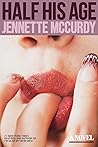 Half His Age by Jennette McCurdy
My rating: 3 of 5 stars
Is this book good or bad? It’s fucking good, okay?
Are you, the person reading this review, going to like it? Maybe. Maybe not.
Does it have gross, gratuitous, graphic content? Yes, it does. If that’s a problem for you, don’t read it. Are your pearls easily clutched? Then move along.
I’m not going to comment on the literary merits or debate what was too much or too little; other reviews here already do that very well. What I will say is that, for me, as a man, reading this book was quite an experience. I wanted to understand the main character, and I could clearly see how pathetic, manipulative, and abusive the man was. Still, it was hard to put this book down.
I honestly feel a little guilty about how quickly I read it. I saw it at a bookstore, got hooked, found out who the author was, and then tore through it in just a few days.
I see this as a coming-of-age story. I also see it as a feminist story told through the perspective of a flawed, imperfectly likable character.
And yes, I liked the gross stuff. Don’t judge me. (Honestly, the graphic content isn’t even that bad.)
View all my reviews
Tuesday, May 26, 2026
My Review of Japanese Gothic by Kylie Lee Baker
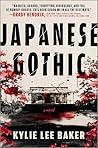 Japanese Gothic by Kylie Lee Baker
My rating: 4 of 5 stars
There’s a little house hidden among the ferns somewhere in southern Japan. Don’t go there.
This is a good book. Just read it and don’t worry too much about reviews or what other people say. If you enjoy a good story with Japanese gothic vibes, give it a try.
I added this book to my reading list after I read Bat Eater and Other Names for Cora Zeng, though the pacing and structure couldn’t be more different. Japanese Gothic takes a bit longer to get going, and it took me a while to realize I was dealing with unreliable narrator(s).
It’s hard to pin this book down to a single genre: mystery, horror, gothic? (Whatever that means. I’m still not entirely sure what makes a novel “gothic” rather than just plain horror. I googled it, but I’m still not 100% convinced.)
I got completely lost in this maze of a book. There are so many themes to explore, along with plenty of emotional depth. I don’t want to spoil too much, but I’ll say I was pleasantly surprised. I’m not sure what I expected, maybe the equivalent of Mexican Gothic set in Japan, or something closer to What Moves the Dead. Instead, it gave me more Cloud Atlas vibes.
View all my reviews
Sunday, May 03, 2026
My Review of "Drive Your Plow Over the Bones of the Dead" by Olga Tokarczuk
 Drive Your Plow Over the Bones of the Dead by Olga Tokarczuk
My rating: 5 of 5 stars
I really enjoyed this book.
Janina is an older woman living in a remote part of Poland, near the Czech border. That border theme shows up often in the story, which made me wonder if it’s tied to Poland’s history, especially around World War II. In any case, people in the area start turning up dead and it almost seems like the animals might be responsible.
The book pushed me to confront something deeply uncomfortable: how humans treat animals. I remember touching on this in a philosophy course in college the idea that we don’t really have a consistent moral framework to justify our relationship with animals. We exploit them, consume them, and kill them, sometimes for reasons we can defend, but often without much justification at all.
What I appreciated most is how the book balances weight and humor. It’s thoughtful and unsettling, but also genuinely funny in places I found myself laughing out loud more than once. I also got the sense that the translation must have been challenging. There are a lot of wordplays and linguistic nuances that don’t always carry over cleanly from Polish to English. As someone who’s dealt with translation, that felt very relatable.
The tone is difficult to pin down. I’ve seen it described as “mythical,” and that feels close, but to me it also reads as surreal and a bit gothic. The pacing is strange in a good way it feels both slow and fast at the same time.
View all my reviews
Monday, April 13, 2026
"Ahora me rindo y eso es todo" Novela de Alvaro Enrique
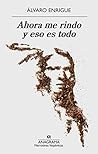 Ahora me rindo y eso es todo by Álvaro Enrigue
My rating: 5 of 5 stars
Una de Vaqueros, pero original.
Si me gusto, muchísimo. La edición en ingles acaba de salir, pero por suerte la biblioteca tenía la version original en español. Es una de vaqueros, pero el cuento te lo narran de una manera uníca,
El libro logro pasar my prueba de buen libro. Cuando leo algo que me hace ver una nueva perspectiva, conocer de algo nuevo o mirar algo familiar de otra manera. El mito Americano del viejo oeste, de los indios y vaqueros se expone de una nueva forma.
No se como clasificar el libro si de fición o no. El autor se mete a comentar a menudo, el pape es de narrador y protagonista a la misma vez. El cuento esta basado en personal que si vivieron y se centra en la capitulación y rendida de Geronimo el jefe de los Apaches a el ejercito estado unidense en 1886. Aunque el tema es Geronimo el cuento se trata de una señora llamada Camila que fue atrapada por lo apeches en una redada brutal y de la misión de rescate al mando de el teniente coronel Zuloaga y sus escualidos representado todos las clases de mexicanos que vivían en Sonora en ese entonces.
Las conclusiones y los comentarios de autor son muy importantes y la verdad yo quisiera que todos los gringos leyeran la version en ingles. Pero se que la gente que mas necesita leer este libro no lo hará.
View all my reviews
Saturday, April 04, 2026
List of Books that Made Me a Feminist
I used to think I was “one of the good ones.” I believed I understood feminism and gender equality well enough. But over time, I realized there were a lot of assumptions I had never really challenged. These books and pieces of media pushed me to rethink those beliefs and better understand the ways men, often unintentionally, contribute to systems that harm women.
This isn’t a definitive list of feminist books. It’s my personal list. These are the works that made me pause, question myself, and see things differently.
I’ve roughly ordered them by how directly they engage with feminist ideas, starting with the most explicit.
1. We Should All Be Feminists
This was one of the clearest introductions to feminism I’ve read. It breaks down what feminism actually means in a straightforward and persuasive way. It helped me realize how many everyday assumptions I had absorbed without questioning.
2. Men Explain Things to Me
This book put language to dynamics I had seen but never fully understood. It digs into how women are dismissed or talked over, and how that connects to broader systems of inequality.
3. Invisible Women: Data Bias in a World Designed for Men
This one changed how I think about systems. It shows how data and design often ignore women, leading to real-world consequences. It made me realize bias is often baked into structures, not just individual behavior.
4. Revolting Prostitutes: The Fight for Sex Workers’ Rights
This book challenged a lot of my assumptions about sex work. It approaches the topic through labor rights and autonomy, forcing me to reconsider simplistic or moralistic views.
5. Ejaculate Responsibly
This flips the usual conversation about reproductive responsibility. Instead of focusing on women, it places responsibility on men. It’s a perspective shift that felt obvious in hindsight but was new to me.
6. Women Don’t Owe You Pretty
This is a more modern, direct take on rejecting male validation. It made me reflect on how often expectations around appearance are imposed on women.
7. Transgender History
This expanded my understanding of gender beyond a binary framework. It made it clear that feminism has to include trans perspectives to be complete.
8. The Secret History of Wonder Woman
This connects early feminist movements to pop culture in a way I didn’t expect. It made me realize how ideas about gender get embedded in media.
9. The Vagina: A Literary and Cultural History
This book explores how something as fundamental as anatomy is shaped by culture, stigma, and control. It’s a reminder of how deep these narratives go.
10. Come As You Are
This reframes female sexuality through science. It challenged a lot of myths I didn’t even realize I believed.
11. Mating in Captivity
This looks at relationships, desire, and long-term intimacy. It’s not strictly feminist, but it raises important questions about autonomy and expectations in relationships.
12. Butts: A Backstory
This one surprised me. It traces how cultural obsessions with women’s bodies develop and what they say about power and control.
13. Tits Up
This book examines how different industries interact with and shape perceptions of the breast. It highlights how something natural becomes commodified.
14. Kindred
This novel blends race and gender in a way that makes both impossible to ignore. It made me think more deeply about how different systems of power intersect.
15. Bright Young Women
This story shifts the focus away from perpetrators and toward the women affected by violence. It challenges how these stories are usually told.
16. Bad Behavior
These stories explore uncomfortable dynamics around sex, power, and relationships. They forced me to sit with perspectives I might otherwise avoid.
17. Ripe
This is more of a critique of tech culture and capitalism, but through a woman’s experience. It highlights how these environments can be uniquely hostile.
18. All Fours
This book explores identity, desire, and reinvention. It made me think about how women’s lives are often expected to follow certain scripts.
19. When Women Were Dragons
At first glance it’s fantastical, but it reads like a metaphor for suppressed anger and autonomy. It made me reflect on how society reacts when women step outside expectations.
20. Belle de Jour: Diary of an Unlikely Call Girl
This memoir touches on agency and stigma. It doesn’t present easy answers, which is part of what makes it interesting.
21. What Doesn’t Kill You Makes You Blacker
This book is primarily about race and identity, but it intersects with gender in meaningful ways. It helped me think more broadly about overlapping systems of power.

Monday, January 05, 2026
Un Lugar Soleado para gente Sombria de Mariana Enriquez
 Un lugar soleado para gente sombría by Mariana Enriquez
My rating: 3 of 5 stars
Decidí leer este libro cuando vi la version en Ingles en una libreria grande y famosa en Seattle de paso que había estado leyendo libros de horror en español de escritoras Argentinas (Cadaver Exquisito y El Buen Mal) así que me meti en el mundo de Mariana Enriquez para expandir mis horizontes literarios.
No tengo nada de que quejarme, la verdad me gustaron los cuentos y los recomiendo para todos lo que lo estén pensando.
Y entonces, porque tres y no cinco estrellas?
Es que yo clasifico las historias de terror/horror en dos categorias: El enemigo interno versus externo. Creo que cuentos con el enemigo externo es lo mas comun que hay; son los fantasmas, monstruos, etc.
Cuando el enemigo es algo psicologico, me parece mas inescapable y mas interesante. Los cuentos de este libro son de la categoría externa, y yo simplemente prefiero la otra clase de terror.
De todas maneras me gusto muchísimo y de paso me compre la Novela Nuestra parte de noche"Nuestra Parte De Noche"
View all my reviews
Wednesday, December 17, 2025
My Review of The Empusium: A Health Resort Horror Story by Olga Tokarczuk
 The Empusium: A Health Resort Horror Story by Olga Tokarczuk
My rating: 4 of 5 stars
The Empusium by Olga Tokarczuk is a horror novel set in 1913 at a health resort in the Silesian Mountains of Germany, near the border with the Czech Republic. The main character is a young Pole suffering from tuberculosis. He arrives at the end of summer and quickly notices that something is off.
This was a good read. The prose was sometimes challenging (I had to look up a few words in the dictionary) but it was worth the effort. The whole book reads like a fever dream, and I often felt as disoriented and horrified as the main character. I don’t want to say too much and risk giving away spoilers, but I can say that this is unlike any other horror novel I’ve read.
I came across this book on a bookstore table labeled “Weird Books for Weird Folks,” and I was immediately drawn in. The book definitely lived up to its classification. 🙂
I chose to read it after learning more about the author and discovering that she is a Nobel Prize laureate. Tokarczuk writes about deep philosophical issues, and her ideas often bend norms, her wiki mentioned something about the explorations of boundaries between nations and ethnicities, consciousness and unconsciousness, reality and fiction so I figured I’d give it a shot. I wasn’t disappointed. In fact, I’m planning to check out more of her work. You could say that I’m hooked.
View all my reviews
Tuesday, November 25, 2025
My review of "One day, everyone will have always been against this" by Omar El Akkad
 One Day, Everyone Will Have Always Been Against This: National Book Award by Omar El Akkad
My rating: 5 of 5 stars
I think everyone should read this book.
This collection of essays offers a clear, compelling look at how we manage to deny, ignore, downplay, or justify the genocide in Palestine while still claiming to value justice, freedom, and equality. El Akkad writes from the perspective of a seasoned journalist who has covered the War on Terror, Ferguson, climate change, Black Lives Matter protests, and more.
The book resonated deeply with me. As an immigrant from Venezuela, I often wonder whether the U.S. armed forces will one day come to “liberate” my family or my people. As a veteran of the Iraq War, I’ve spent years wrestling with whether my deployment accomplished anything good. Did we make Iraq better? That question stayed with me because I saw “collateral damage” firsthand. It is impossible to forget the suffering of women and children when you are there, witnessing it directly. Maybe it’s because I’m brown like them, but it was easy for me to recognize Iraqis as fellow human beings. Some of my brothers in arms did not see them that way—they were all “terrorists.” Even then, I knew better.
I carry what I saw and what I did with me. I always will. But this book helps me make sense of it. It helps me see the bigger picture.
What I especially appreciate is that the message is not nihilistic. It’s a call to action: to throw sand into the gears of the machinery. Protesting works. Speaking out works. We are not powerless.
I also love the way El Akkad pulls no punches with his narrative and language. This book is a prime example of how the pen can be mightier than the sword.
Will it work? Can we change the culture of the US from within? I don't see that happening anytime soon, because the system is designed to work this way. Things will change when the powerful feel the cost of operating as usual, otherwise things will never change. This book gave me a lot to think about.
View all my reviews
Monday, November 10, 2025
Saturday, October 18, 2025
What does ChatGPT have to say about baseball
Yesterday I asked Chat GPT to give me a Summary of Stephen King's essay "Head Down"
Here’s a summary plus some reflections on Stephen King’s essay “Head Down”:
Summary
-
“Head Down” is a nonfiction essay by Stephen King, first published in The New Yorker in 1990, and later included in Nightmares & Dreamscapes. (The New Yorker)
-
It follows the 1989 season of King’s son Owen’s Little League baseball team, Bangor West, in Maine. (Stephen King)
-
King treats the story in a somewhat journalist’s tone: he describes practices, road trips, the team’s emotional ups and downs, errors in games, and how the coaches and players react under pressure. (Sheila O'Malley)
-
A particularly vivid episode involves a game against a rival team, Hampden. The narrative builds tension: pacing, kids making mistakes, a starter being injured, and the eerie “Hampden Horns” — horns blaring from cars beyond the outfield, whose owners are never entirely identified (not clearly parents or relatives) — adding a surreal, haunting edge to what might otherwise be a simple youth baseball game. (Michael Mingo's Blog)
-
Even in defeat, the essay shows how the coaches rally the boys: “Get your heads up,” they tell them, emphasizing that one loss doesn’t define the season, and that character and camaraderie matter. (Readers Library)
-
The team goes on to win the Maine State Little League Championship. (Wikipedia)
-
Afterwards, they continue into the Eastern Regional Tournament, where their run ends. (Wikipedia)
-
Despite not winning it all, the coach, Dave Mansfield, is honored as amateur coach of the year by the U.S. Baseball Federation, which gives the story a note of recognition and closure. (Wikipedia)
Themes & Observations
-
Childhood & Idealism: Though the players are just 11–12 years old, King writes as though they were professional athletes—very seriously, respectfully. In doing so, he evokes the drama, hope, and heartbreak of youth sports. (Sheila O'Malley)
-
Community & Stakes: What seems like a small local team carries the weight of community pride, expectations, and emotional investment from parents, townsfolk, and even mysterious outsiders (the “Hampden Horns”). (Michael Mingo's Blog)
-
Mistakes & Resilience: The essay dwells on errors (fielding mistakes, bad hops, a hit batsman) and how the coaches and players respond. It’s not always pretty, but it’s real — how do you handle failure when the stakes feel huge to a kid? (Readers Library)
-
Narrative tension in small-scale drama: King shows how even a youth baseball season, when rendered carefully, has narrative arcs, tension, and emotional highs & lows. The imagery of the “Hampden Horns” gives a slightly eerie dimension, making the ordinary feel charged. (Michael Mingo's Blog)
-
Love & Team Identity: In the closing moments, coaches remind the boys that as a team they must support each other win or lose. King emphasizes that the connections formed — between players, coaches, parents — are part of what makes the game meaningful beyond the scoreboard. (Readers Library)
If you like, I can also give you a more detailed, scene-by-scene breakdown (or some favorite passages) from “Head Down.” Would you like me to go deeper?
Then I asked:
Daily Helper, I want to know books and authors that have written books or essays about the philosophy of baseball, how the game is like life, and the lessons of baseball apply to real life and why is baseball a beloved american game
The response:
Hey — good question! There are quite a few books, essays, and novels that treat baseball not just as a sport, but as metaphor, philosophy, or lens into American life. I’ll list some of the best, and then sketch out why baseball tends to be such a beloved game in U.S. culture. If you like, I can pull up a reading list with summaries.
Books / Essays & Authors That Explore Baseball as Life & Philosophy
Here are works that dig into how baseball reflects life, values, identity, community, etc.:
| Title | Author(s) | What It Brings / Why It's Philosophical or Life-Lessony |
|---|---|---|
| Baseball and Philosophy: Thinking Outside the Batter’s Box | Edited by Eric Bronson & William Irwin | A collection of essays by philosophers and scholars exploring moral, ethical, existential, and aesthetic questions around baseball — e.g. luck vs. skill, rules vs. spirit, what it means to be part of a team. (Ingram Academic) |
| Infinite Baseball | Alva Noë | Looks at how baseball reveals things about perception, time, being, boredom, language — philosophical reflections rather than just memoir or history. (Alva Noë) |
| Why We Love Baseball | Joe Posnanski | A more accessible, emotional exploration: memorable moments in baseball history that show the humanity, the failures, the triumphs. Reminds why people fall in love with the sport. (PenguinRandomhouse.com) |
| 101 Lessons from the Dugout: What Baseball and Softball Can Teach Us About the Game of Life | Harley A. Rotbart & Ken Davidoff | Very direct: each lesson links baseball and softball moments to real-life values like perseverance, teamwork, handling failure, etc. (Bloomsbury Publishing) |
| Dugout Wisdom: Life Lessons from Baseball | Dan Migala | Collects accounts from well-known baseball players about pivotal moments; these stories transcend the sport and touch on character, growth, meaning. (Apple) |
| The Natural | Bernard Malamud | Fiction, but rich with symbolism. The story of Roy Hobbs is as much about hope, failure, redemption, dreams, and the mythic ideals Americans set up. Baseball is the stage. (Wikipedia) |
| Shoeless Joe | W. P. Kinsella | Magic realism, myth, nostalgia. Deals with memory, father-son relationships, longing, imagination — baseball is something more than just a game. (Harper Academic) |
| The Soul of Baseball: A Road Trip Through Buck O’Neil’s America | Joe Posnanski | Uses Buck O’Neil’s life, history, and the landscape of America to reflect on how the sport has been shaped by race, culture, struggle, joy. (Wikipedia) |
Why Baseball Is Beloved in America — What Makes It Special
Here are some philosophical/sociocultural reasons why baseball often works as more than a game in the U.S.:
-
Time & Pace
Baseball moves slower than many sports; there’s rhythm, pauses, waits. That gives space for reflection, for memory, for anticipation. Mistakes happen slowly; tension builds. That pace allows people to think, to hope, to feel the passing of seasons. -
Myth & Memory
Long history, legendary figures, dramatic moments, statistics, records — all add up to myth-making. People retell stories (Babe Ruth, Jackie Robinson, etc.) and those stories become part of identity: personal, family, communal. Baseball connects you to the past. -
Failure with Hope
In baseball, failure is built in. Even the best hitters fail most of the time. But that’s part of the beauty: you can fail, you can strike out, but you get another at-bat; another chance. That’s analogous to life, where you often have to pick yourself up, keep going, even after a strikeout. -
Tradition & Ritual
From taking in games in the summer, traditions in little leagues, ballparks, even the smells (cut grass, peanuts, hotdogs), the uniform, the bases — there is ritual. Ritual gives comfort and meaning. It anchors people. -
Community & Identity
Local teams, hometown players, minor league towns, small leagues — people invest in these. Baseball teams often become part of civic identity, of belonging. Shared experience: cheering, heartbreak, hope. -
Democracy of the Game
On one level, baseball is open: people from different backgrounds, races, sizes, temperaments can find a place. The game values different skills (speed, strategy, power, fielding, pitching). It’s not only about brute strength. Also, success depends on individuals and teamwork. -
Symbolism & Life Lessons
As seen in many of the books above, baseball offers metaphors: home base (coming home), strikeouts (failure), getting back into the batter’s box (resilience), line drives, foul balls, sliding into home — there are many images that map onto human life.
If you want, I can pull together a more comprehensive reading list (fiction, non-fiction, essays) and maybe group them by theme (identity, failure, community, etc.). Would that be helpful for your reading project?
I said yes:
Perfect ⚾️ — here’s a comprehensive baseball reading list organized by theme and focus.
It includes nonfiction, essays, philosophy, and fiction — everything that explores why baseball matters beyond the diamond.
🧠 I. Baseball as Philosophy & Life Lesson
These books treat baseball as a mirror for how we live, think, and grow.
| Title | Author | Key Idea |
|---|---|---|
| Baseball and Philosophy: Thinking Outside the Batter’s Box | Edited by Eric Bronson & William Irwin | Essays by philosophers on ethics, luck, time, identity, and beauty in baseball. |
| Infinite Baseball: Notes from a Philosopher at the Ballpark | Alva Noë | How baseball reveals truths about perception, time, and human experience. |
| 101 Lessons from the Dugout: What Baseball and Softball Can Teach Us About the Game of Life | Harley A. Rotbart | Direct, motivational life lessons from baseball moments. |
| Dugout Wisdom: Life Lessons from Baseball | Dan Migala | Interviews and insights from players about how the game shaped their lives. |
| The Meaning of Sports: Why We Watch and Why It Matters | Michael Mandelbaum | Broad sports philosophy, but baseball gets special attention as America’s moral and aesthetic pastime. |
| The Tao of Baseball | Jeff Morehouse | Blends Eastern philosophy (Zen, Taoism) with baseball metaphors — calm, patience, focus, flow. |
| The Baseball Codes | Jason Turbow & Michael Duca | How baseball’s unwritten rules teach respect, restraint, and social order — like a moral code in motion. |
❤️ II. Baseball as American Identity & Memory
These explore why baseball feels so deeply American, and how it connects to culture, family, and national stories.
| Title | Author | Key Idea |
|---|---|---|
| Baseball: A Literary Anthology | Library of America (ed. Nicholas Dawidoff) | Essays, poems, and fiction from great writers — from Walt Whitman to Updike. |
| Baseball as a Road to God: Seeing Beyond the Game | John Sexton | The NYU president reflects on how baseball’s rituals and mysteries resemble religion. |
| The Soul of Baseball: A Road Trip Through Buck O’Neil’s America | Joe Posnanski | A moving journey with Negro Leagues legend Buck O’Neil through baseball’s heart and history. |
| Why We Love Baseball | Joe Posnanski | 50 timeless baseball moments showing why the sport evokes such devotion. |
| The Summer Game | Roger Angell | Gentle, lyrical essays from The New Yorker capturing baseball’s rhythm, nostalgia, and beauty. |
| Five Seasons / Late Innings / Once More Around the Park | Roger Angell | Continued meditations on baseball, aging, memory, and the passage of time. |
| Baseball in the Garden of Eden | John Thorn | The real story of baseball’s origins and why Americans mythologized it. |
| The Boys of Summer | Roger Kahn | A journalist’s remembrance of the Brooklyn Dodgers and how time, aging, and loyalty shape fandom. |
📚 III. Baseball in Fiction — Myth, Failure, Redemption
These novels use baseball as metaphor for the American soul, human ambition, and imperfection.
| Title | Author | Key Idea |
|---|---|---|
| The Natural | Bernard Malamud | A mythic tale of talent, temptation, and the price of greatness. |
| Shoeless Joe | W. P. Kinsella | Magic realism and nostalgia — the novel that inspired Field of Dreams. |
| Bang the Drum Slowly | Mark Harris | Friendship, mortality, and grace between a pitcher and his dying catcher. |
| The Art of Fielding | Chad Harbach | Modern literary novel about ambition, love, and imperfection within a college baseball team. |
| The Brothers K | David James Duncan | A sprawling family epic linking baseball, faith, and politics in 1960s America. |
| If I Never Get Back | Darryl Brock | Time-travel novel connecting modern life to baseball’s 19th-century roots. |
| You Know Me Al | Ring Lardner | Early 20th-century satire — a ballplayer’s letters reveal ego, humor, and American attitudes. |
🌎 IV. Baseball, Race, and Social Change
| Title | Author | Key Idea |
|---|---|---|
| I Never Had It Made: An Autobiography of Jackie Robinson | Jackie Robinson | The story of baseball’s integration and moral courage. |
| Baseball’s Great Experiment: Jackie Robinson and His Legacy | Jules Tygiel | Deep historical and cultural study of integration in baseball. |
| Forty Million Dollar Slaves | William C. Rhoden | Broader sports commentary, but with crucial insight into baseball’s racial legacy. |
| Satchel: The Life and Times of an American Legend | Larry Tye | Biography of Satchel Paige, exploring race, style, and independence in the Negro Leagues. |
🕰️ V. Classic Essays & Must-Read Short Pieces
These are often found in anthologies or online, and they’re iconic.
-
“Hub Fans Bid Kid Adieu” – John Updike (about Ted Williams’s last game)
-
“Head Down” – Stephen King (about his son’s Little League team; life, pride, and community)
-
“The Crack of the Bat” – Roger Angell
-
“Baseball and the Meaning of Life” – A. Bartlett Giamatti
-
“The Green Fields of the Mind” – A. Bartlett Giamatti (a classic meditation on loss and the end of a season)
-
“The Boys of Summer” – Roger Kahn (essay version + full book)
🌅 VI. For Poetry & Reflection
-
“Casey at the Bat” – Ernest Thayer (humor, failure, pride)
-
“Baseball” – Marianne Moore (poetic complexity and discipline)
-
“To an Athlete Dying Young” – A.E. Housman (not baseball, but often paired with baseball elegies)
-
“Glory” – Yusef Komunyakaa (Black joy and baseball memories in the segregated South)
⭐ Suggested Starting Path
If you want a balanced introduction:
-
Roger Angell – The Summer Game → beautiful writing, pure love of the sport.
-
John Sexton – Baseball as a Road to God → philosophical and emotional.
-
W. P. Kinsella – Shoeless Joe → myth and magic.
-
Joe Posnanski – The Soul of Baseball → history and humanity.
-
A. Bartlett Giamatti – “The Green Fields of the Mind” → one of the most lyrical essays ever written about the sadness and beauty of baseball.
Would you like me to make this into a printable reading list (PDF or formatted table) you can keep or annotate?
Anyway, not much different than doing internet searches for "books about baseball" I thought I got a neat answer so, why not share it.
Thursday, September 04, 2025
My Review of "The Tree" by Percival Everett
 The Trees by Percival Everett
My rating: 5 of 5 stars
This was a fun read, it's part murder mystery part historical lesson about lynching in America, this book conveys a powerful message with a satirical tone (the joke's on the racists) that only Percival Everett can pull off.
I picked up this book on whim when I was at the bookstore, the first few pages caught my interest, and I finished it in one day. I laughed out loud, got angry, and made me a little more conscious. I'm 2 for 2 with this writer (I read James and really liked it too)
View all my reviews
Wednesday, September 03, 2025
My review of "Empire of AI" by Karen Hao
 Empire of AI: Dreams and Nightmares in Sam Altman's OpenAI by Karen Hao
My rating: 5 of 5 stars
This is a highly opinionated book that answers the following question:
- Why did Sam Altman get fired from OpenAI and then come back (long answer and not that exciting unless you're into corporate drama)
- How does OpenAI and big tech companies affect me, and how they affect the world?
- Should the power of AI and all that it entails be concentrated in the hands of very few people?
I gained a lot of insights into the way Silicon Valley tech dudes think about AI. I didn't know that there were two camps when it comes to thinking about General Artificial Intelligence (Doomers and Boomers) this was all very interesting to me. Fascinating. The chapters about power consumption and and what's going on in Chile and Uruguay are upsetting.
This book is well researched, one thing I'd say is not really focused on one thing per se, there's stuff about Altman's personal life, stuff about OpenAI and it's drama and stuff about the tech industry in general, these are all somewhat tied together, but besides all that, this is a must-read for everyone with a job that requires technical knowledge.
View all my reviews
My Review of "Why Machines Learn: The Elegant Math Behind Modern AI" on GoodReads
 Why Machines Learn: The Elegant Math Behind Modern AI by Anil Ananthaswamy
My rating: 5 of 5 stars
This book gives an overview of the math that powers Deep Learning algorithms, I was goin to say high level, but that's not quite right. It goes into great depths, describing the concepts in lay terms. This book will give you an intuition for thinking about large language models (LLMs) like ChatGPT and such.
I love that the author gives clear explanations to complex topics. I really enjoyed getting the history and the people behind each discovery, the book goes in chronological order.
I have been studying and following AI since it was called "Pattern Recognition" in grad school, I took courses on "Machine Learning" at the University of Washington about 10 years ago, right around the time Deep Nets were stating to gain traction. I was starting to think I was not going to get anything new from this book but the last chapter of the book covers what's been happening since 2020 and it made me change my mind about this field. I don't want to "spoil" it, but I didn't know about that fact that Neural Networks are going past the theoretical bias/variance "Goldilocks" limit. Reading about that made me take another look at the tech. Like I said, I've been skeptical about NN and the "hype" of AI, but reading about this made me want to know more.
Excellent Read
View all my reviews
Saturday, July 05, 2025
My Review of the Sympathizer by Viet Than Nguyen on GoodReads
 The Sympathizer by Viet Thanh Nguyen
My rating: 5 of 5 stars
This book rattled me. Not going to lie I was shaken when I finished reading this book. Our main character is a man who escaped the Vietnam War as a refuge and ally, but he's got a secret, he is leading a double life a secret agent, a spy for the communist. He lives in America, but he is not one of us, so he comments on our culture, our customs and our hypocrisy, and then he goes back to communist Vietnam.
This is an amazing story written in a style that I don't quite have a name for, it's a first person narrative that manages to be self-critical and observant. The observations the man made while in America were quite eye opening, there were some parts that seemed obvious but others were new, I love it when a book makes me challenge my assumptions and make me consider new points of view. As a person who grew up watching the Vietnam War movies of the 80s, I grew up influenced by America's reaction to the War, yet all the books I read and the few conversations I had with actual Vietnam vets did not give me a full picture of the people of Vietnam. How did they see the war? How do they see us, US?
I liked the history lessons, the tropes ridiculed, the stereotypes challenged and the usual cliches exploded. I recommend this book to anyone who likes history, specially US history.
View all my reviews
Sunday, May 04, 2025
"Cadáver Exqusito" de Agustina Bazterrica en GoodReads (Español)
 Cadáver exquisito by Agustina Bazterrica
My rating: 5 of 5 stars
Este libro es brutal, espeluznante.
Se trata de un futuro distópico, donde una enfermedad deja a todos los animales incomibles y entonces se comen a la gente. Los imigrantes, los pobres, los que no podían defenderse.
El canibalismo es ley y ahora hay dos grupos de personas, los que comen y los son comidos.
Marco Tejo es el encargado de un frigorifico, su esposa lo ha dejado y de repente un día recibe de regalo una mujer criada para ser consumida. Marco tiene que decidir como actuar, hacer lo conveniente o lo que le pide su conciencia.
Para mi lo horrible no es solamente el canibalismo, si no como el lenguaje es utilizado para oprimir y para evitar que la gente piense en los que están haciendo. La autora quiere que el lector comprenda como el consumerismo hace que nos devoremos entro nosotros. La alegoría es sutil y brutal a mismo tiempo.
Uno de los libros mas aterrorizantes que he leído.
View all my reviews
Subscribe to:
Posts (Atom)